Earth Designs garden design and build Bringing news, views and garden design advice and information

Garden Design Advice : Family Garden Design

May 18
London Garden Design company, Earth Designs, offer a UK garden design and build service in and around London and the South East. We also design gardens across the British Isles and rest of the world through our Garden Design by Post service. Please contact info@earthdesigns.co.uk for further information on this or any other of our services.Garden in Watford 

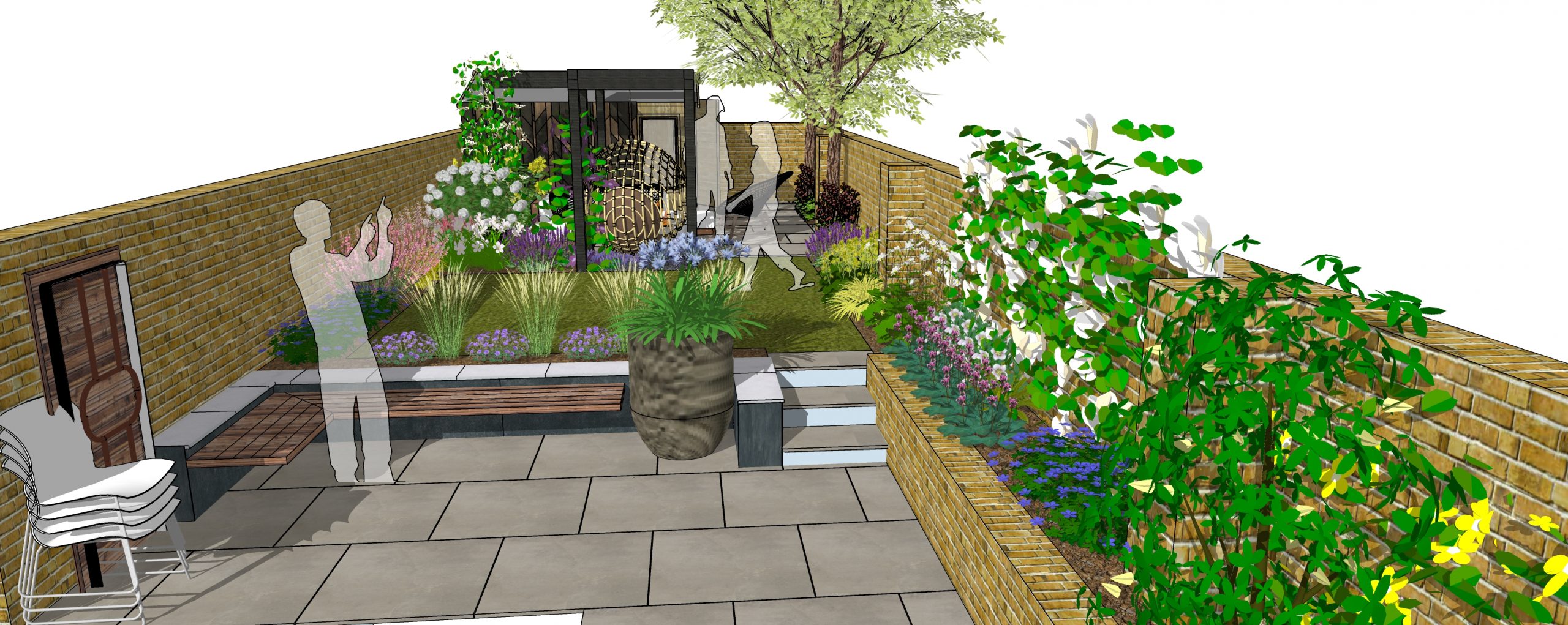
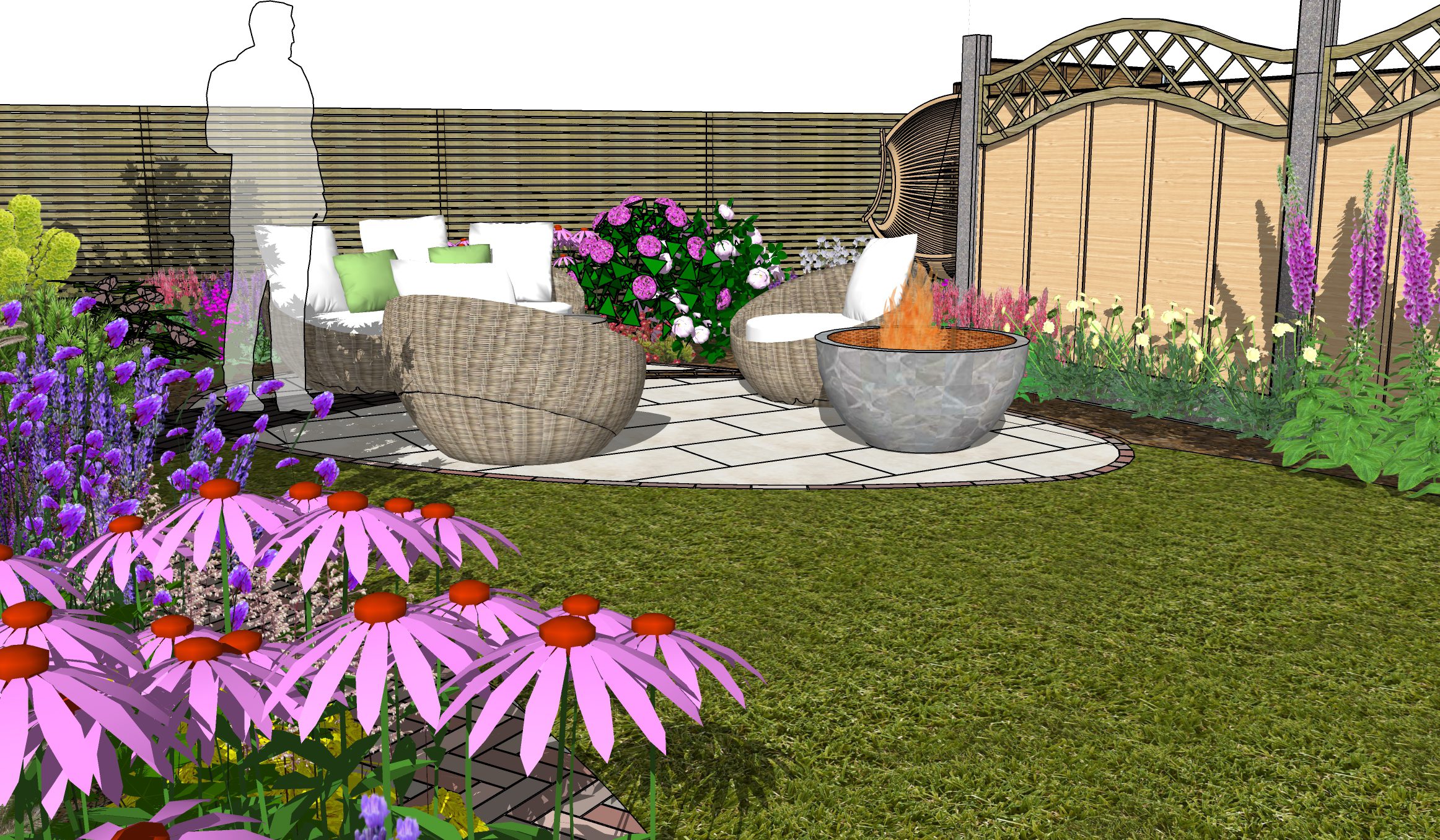
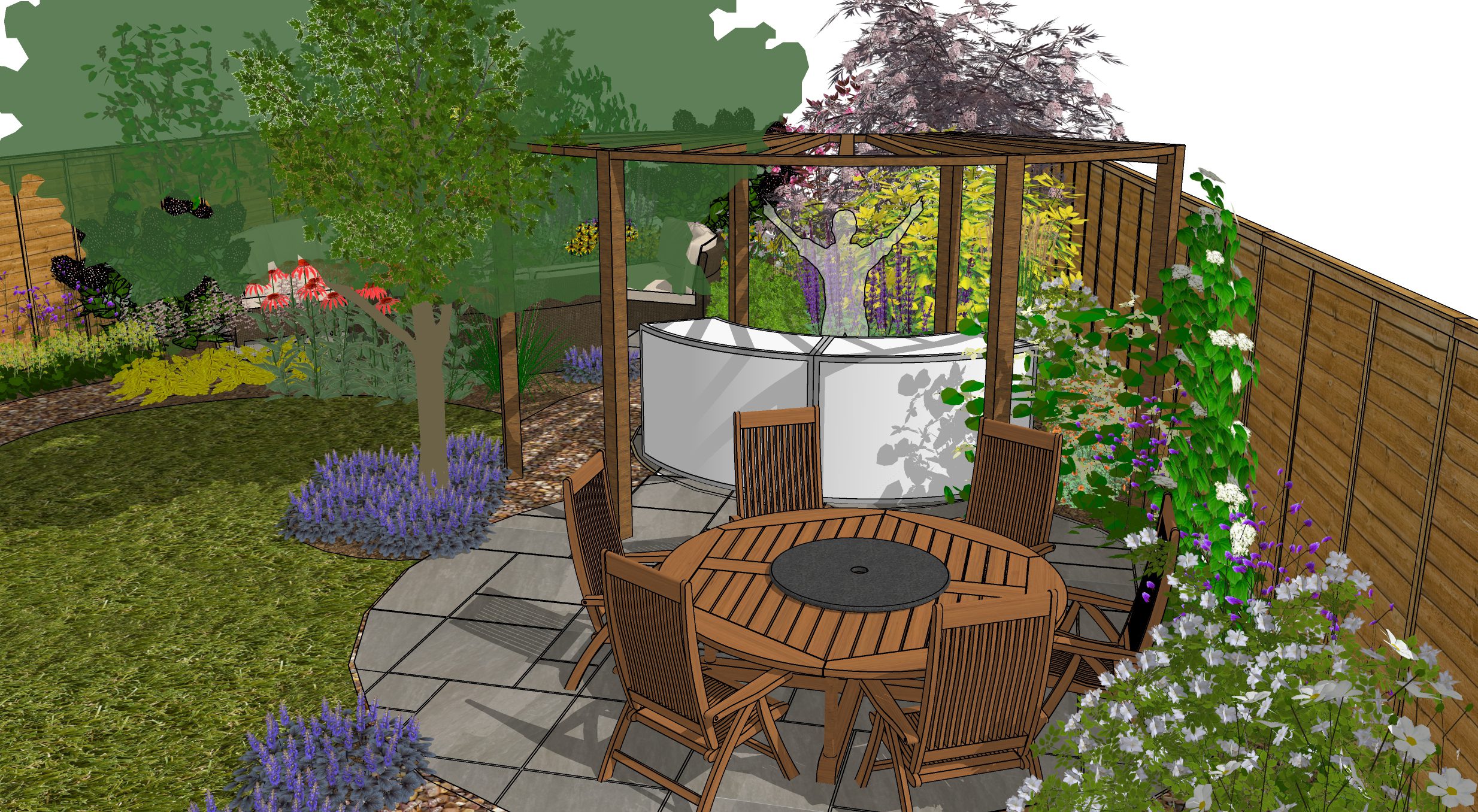
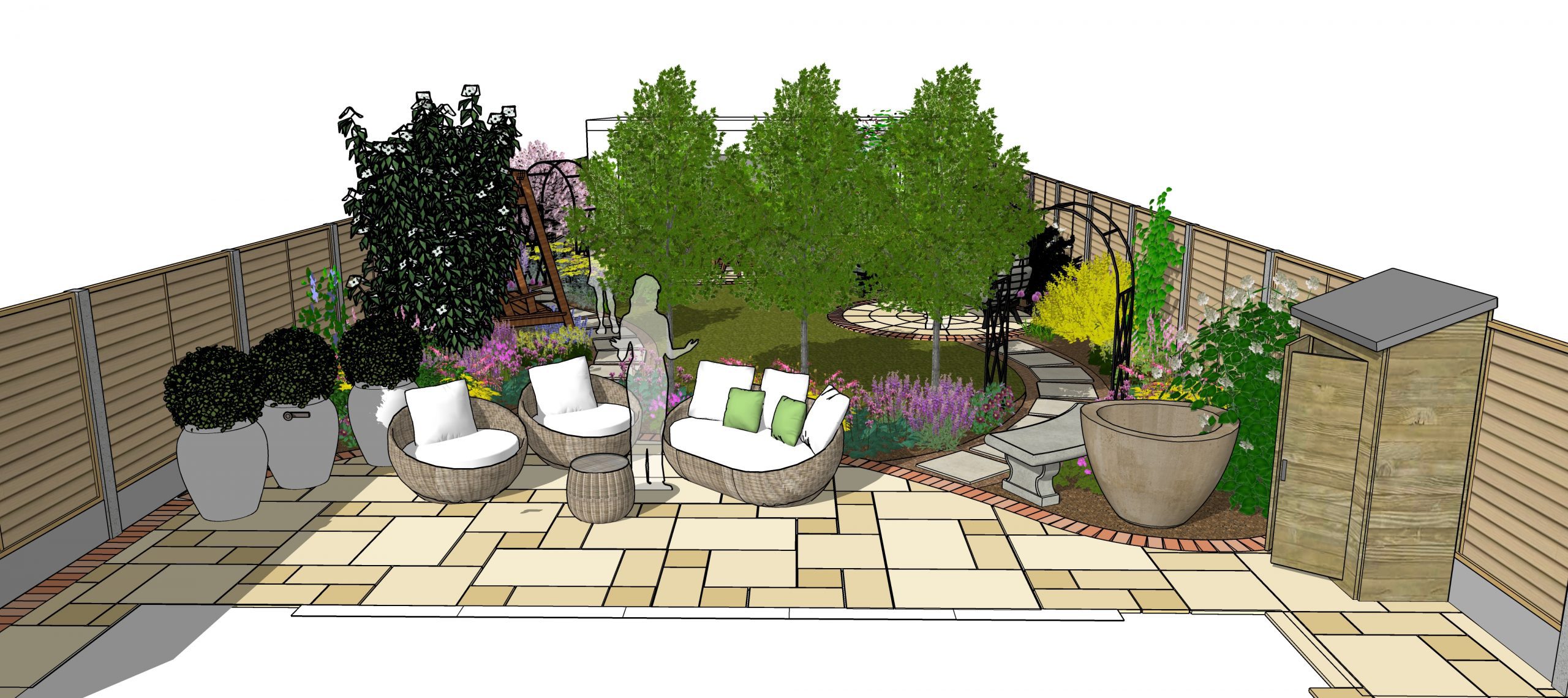
This client wanted to revamp their existing garden but planned to move in a few years and so were looking for a cheap family garden design. To save cost the design would incorporate their existing patio, plus relatively cheap materials such as lawn. They also wanted a simple play area for their children. Earth Designs suggested adding a paved stone circle to adjoin the existing lawn, which itself would be shaped into an ellipse. A pathway running around the right side of the lawn to a children’s area in the back of the space. This would be enclosed with a picket fencing and contain a climbing frame, swing and maybe a den. Behind this area several silver birch could be included to increase shade to the children’s area, as well as affording some much needed privacy from the house next door.

A pathway arcs round the left hand side of the garden travelling down the garden to a shed or storage area. PlantingGarden design idea family garden in the garden could take the form of low maintenance year round interest shrubs, with the emphasis on leaf colour and form rather than showy blooms.

Share this:
Share this page via Email Share this page via Stumble Upon Share this page via Digg this Share this page via Facebook Share this page via Twitter

London Garden Design Diary Week 19

May 17

What’s been going on in the’ Shedquarters’ of this busy Garden design studio in London

WOTB wk19 2013

Work continues to implement our East London Garden Design at the site in Highams Park, with more paving installed including some tricky drainage channels and pipes. Now the site is clear Matt has ordered the railway sleepers in preparation for construction of the complicated bespoke furniture and screen/retaining wall. The screens and walls will comprise upended sleepers of varying lengths installed in concrete foundations to create a solid structure. Each upright sleeper will be stained in blocks of three different colours to create a patchwork effect. The foundation trenches have almost been dug and work will progress on the installation next week.

Matt is due to complete the implementation of a small planting design in Essex this week. The site in Romford has been partially cleared/cut back, an existing wooden bench stripped of its weathered varnish and re-stained and a concrete garage painted on Friday, The team will return next week to the reshape the lawn and install the plants.

Katrina has won a garden design in Enfield. The client recently bought the property and in the process of commissioning an extension. He would like his garden landscaped at the same time. The long skinny plot will be carved into three areas and include a garden office and two patio areas as well as some lawn.

Producers from the television show ‘Love Your Garden’ have contacted Earth Designs to request our assistance with their second series. They are looking to visit a garden produced by a London Garden Designer to film design features that could provide inspiration for a family garden in a small space. Alan titchmarsh would like film in the space in order to add inspirational content for a well-deserving garden build he is overseeing. Katrina has sent a selection for them to choose from.

Matt was finally confident that the weather was going to stay dry enough for him to return to the garden build in Hackney and seal the encaustic tiles, so that we can finally get the garden sign off by the client. The client is delighted with the space and has already been getting lots of use from it.

There are currently two garden postal designs in the studio. One from Lincolnshire has been sent three sketches for review, while the other is in the process of completing the postal design questionnaire ready to return to us.


Share this:
Share this page via Email Share this page via Stumble Upon Share this page via Digg this Share this page via Facebook Share this page via Twitter

London Garden Design Diary Week 18

May 17

We have been so busy in our London Garden Design studio we have been late with our diary, but here’s this week’s offering. We currently have two sites under construction:

London GHarden Design Diary week 18 2013


The landscaping in Holloway was nearing completion a few of weeks ago, but suffered delays due to the cold and constant rain and was held back further by the client going on holiday. Matt and the team will return next week to lay the lawn, install the lighting and complete a few other outstanding items. The majority of the planting was completed before the client went on holiday, but there are still some Iris, Eremus, Anemone and box balls left to install..

Matt is also working on a garden build in East London. The site in Highams Park is using a range of different material, including hardwood decking, paving and railway sleeper furniture and retaining walls. The team partially cleared the site and installed the decking and pergola while we were away, leaving paving and railway sleeper furniture to construct. Matt has made a start on the sandstone paving, while the rest of the team continue to clear the space (all through the house) and bring

materials in.

Earth Designs has been featured in a new online publication called ‘gardenlovelife’. We were highlighted as a London Garden Design company and features one of our small urban gardens in Essex. The magazine is packed full of sumptuous photos of aspirational gardens and is to be published digitally every quarter.

Katrina has also been interviewed at length for an up and coming Real Homes magazine article on our garden in Sevenoaks. The article focuses on small modern garden design and discussed in detail the variety of materials and methods of construction

Enquiries are coming in thick and fast after we were mentioned in Living Etc Urban Garden Designers supplementary magazine last month. Katrina has several potential clients throughout London and the South East booked for consultations in the coming weeks.


Contracts and deposits are in the process of being finalised on the garden design in Woodford that we secured in the last couple of weeks. The garden design features planting, decking, lawn and Perspex screens to overcome the privacy issues faced by the client. Works are due to start at the end of May as the client is expecting a baby at the beginning of July and would like the works to be completed by then.

Share this:
Share this page via Email Share this page via Stumble Upon Share this page via Digg this Share this page via Facebook Share this page via Twitter

Garden Design Inspiration: ‘Jugs Away’

May 14

This modern garden design uses the strong iconic themes of these art deco jug, cup and saucer. Directly outside the back door a circle of hardstanding gives easy entry into the garden. Constructed from self levelling concrete and edged in sandstone setts, iArt deco jug inspiration for garden design sketcht provides the strong monochrome colour scheme present in the inspirational ceramics. This arera would bel suits el for cafe style dining or for sun loungers depending int eh gardens aspect and it’s use during different times of the day. Slightly raised to the rest of the garden, this design for a garden with levels it has a step down to a secondary patio. To Mark this transition there is a stainless steel water feature in the form of a spout replicating that of the spout on the jug. It pours into a tiled mosaic pool. The patio itself is made up with a striking pattern of black limestone setts and cream travertine again imitating the monochrome palette. Defining the Sunday design on the crockery, it is laid in bold lines, fanning out across the rest fo the space. Large enough for a table and chairs, or sun loungers, it allows for dining to happen in a more central location in the garden. The sun rays continue across the space with hard landscaping being replaced with soft, as orniphogons (black grasses) act as a strong contest against lawn. Round the edge of the garden herbaceous perennials in yellows and oranges such as rudbekias and heleniums give a zesty palette, whilst hardy evergreens shrubs such as eurphobia and pachysandras provide form and shape throughout the year.

Share this:
Share this page via Email Share this page via Stumble Upon Share this page via Digg this Share this page via Facebook Share this page via Twitter

A modern garden design for East London – seeing blue in Woodford

May 11


This garden had some partial landscaping done when the clients bought the property. A patio from the back of the house wraps round the side return and extends from the back of the house by 3 metres. The client is keen in particular to increase the privacy down the left hand side of the garden as the boundary with the neighbour is particularly low and the client feels overlooked quite considerably. They would also like an area down the bottom of the garden to catch the last of the afternoon sun.

IMG_1444


Sketch Ed187

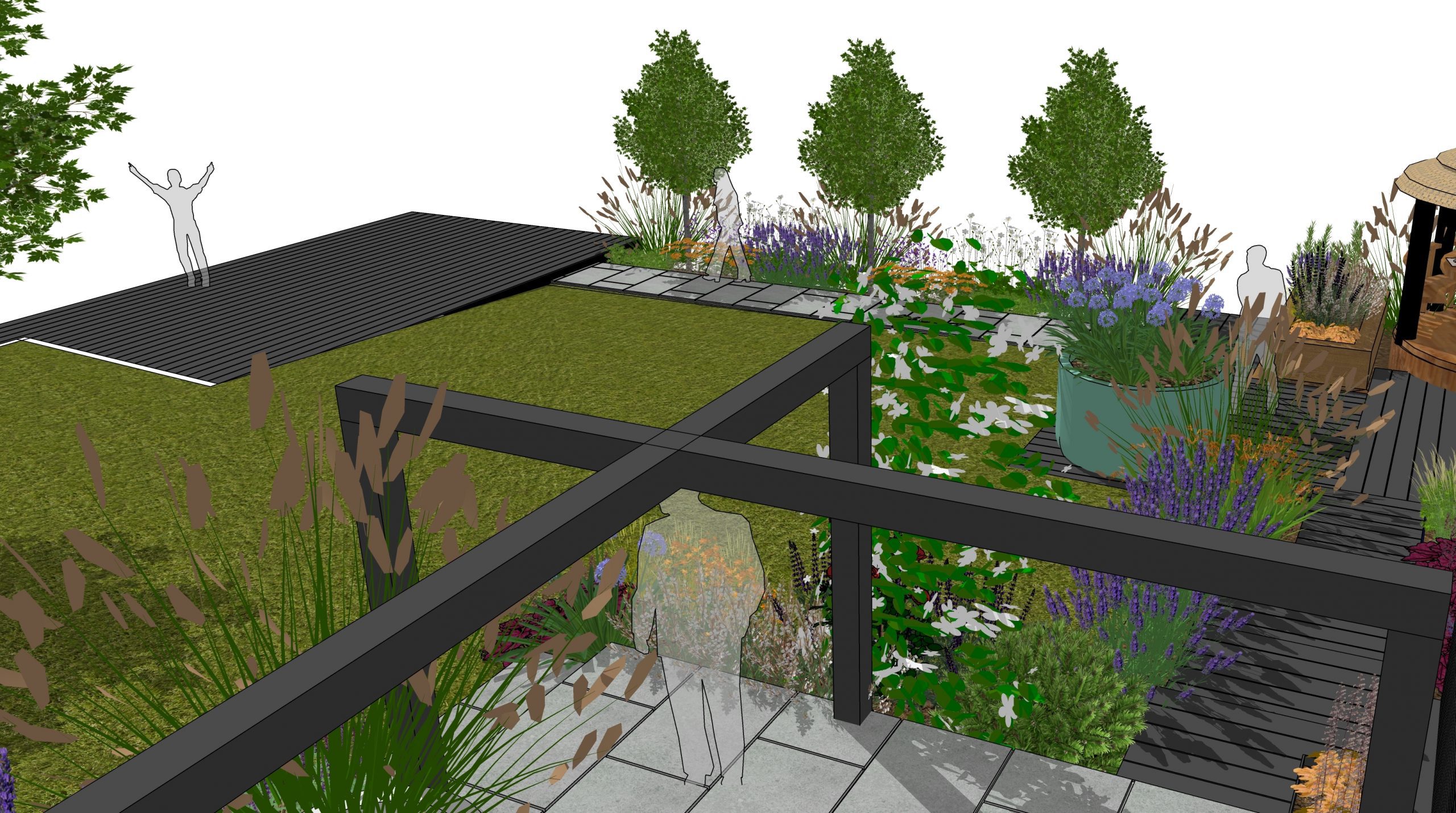
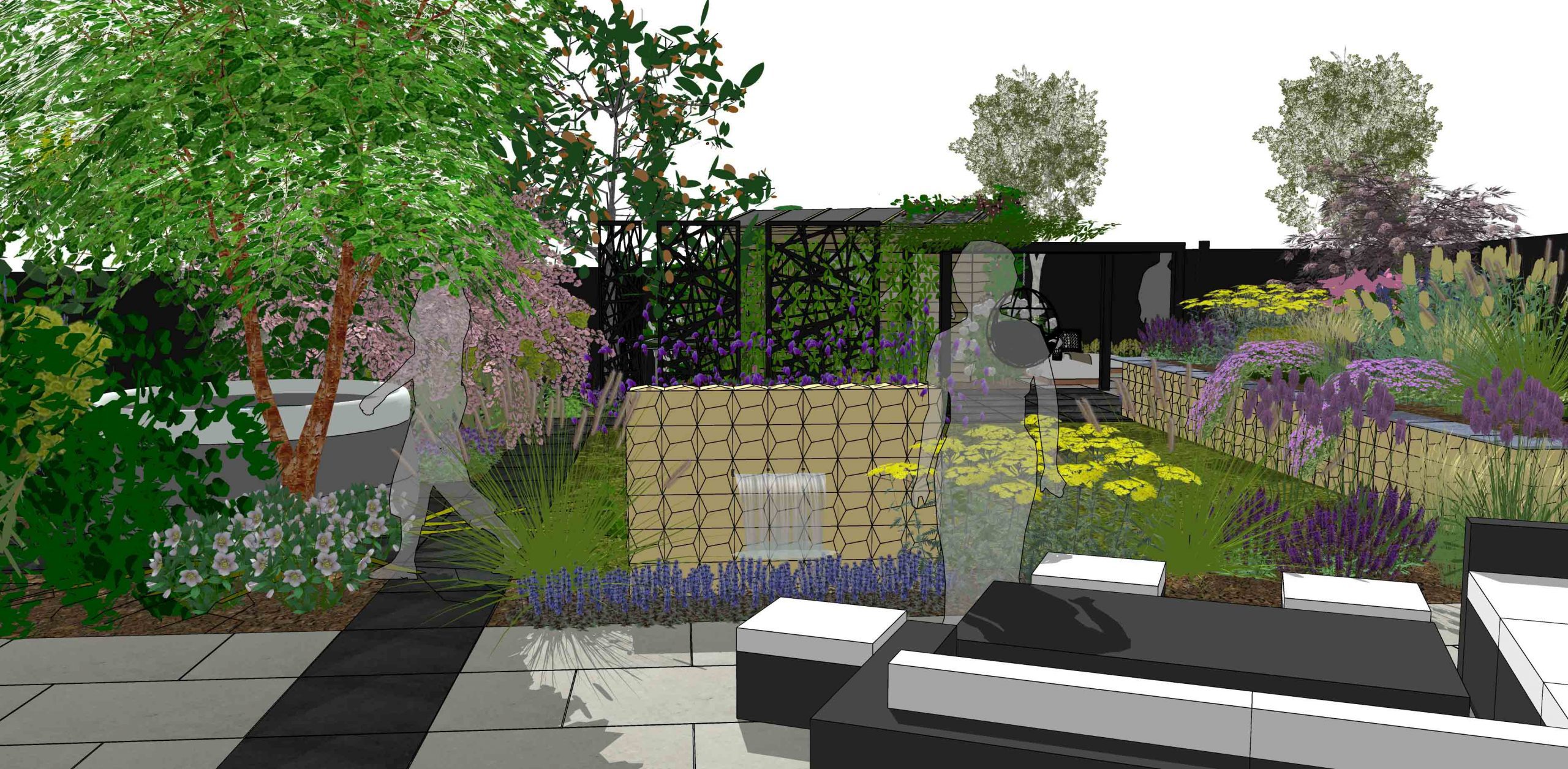
The garden will be landscaped from the existing patio. Stretching down the garden a decked walkway leads to a large area of decking suitable for housing a large rattan sofa and table. Blog ED186 Board 1 Blog ED186 Board 2


Along the left hand boundary where screening needs to be increased a series of Perspex screens of varying heights and widths set on the diagonal help to increase privacy. visual 3 visual 2 visual 1

Two squares of lawn slightly off sett divide up the space, on the left where the second lawn insets, three fibreglass tanks, planted with bamboo again help with screening from next door. visual 4 visual 3 visual 2 visual 1

Another trio of screens sites slightly further in the garden help to provide an interesting backdrop and opportunity for dramatic lighting, as well as aiding privacy while sat on the decked areaED187 FULL PRESENTATION_5 ED187 FULL PRESENTATION_4 ED187 FULL PRESENTATION_3


Share this:
Share this page via Email Share this page via Stumble Upon Share this page via Digg this Share this page via Facebook Share this page via Twitter

A Green Screen with a dash of Style

May 7
Garden screen divider
The green screen from Deesawat

This product really caught my eye.  Vertical gardens and green walls are very ‘en vogue’ at the moment and these screens from Deesawat are the ultimate green wall. A great addition to any contemporary garden design they provide a green swathe on the vertical plain (something not always easy to achieve in a garden) with the added advantage of giving height and screening wherever required. Privacy is often an issue, particularly in urban garden design where gardens are small and densely packed together, meaning that your entire garden can be seen by you neighbours.

Using screens or planting to break a garden down into smaller spaces is a great design trick, as it creates a sense of intrigue and discovery and can actually make a garden look bigger. Screens can also provide a great backdrop, particularly when there are unsightly but necessary areas of the garden, such as sheds, utility areas and in some case children’s play equipment.
DEESAWAT produce these screens in Thailand but they are available in the UK. The company has this to say on their website: DEESAWAT’s newly developed GREEN WALL modular system for a vertical growth of plants on wood shelves and an astonishing effect on the interior design both visual and climatic. It’s a modular system for vertical planting for interior and exterior use. Made of teak with individual planters sitting on shelves. Many sizes available that link together to a form a single unit. The curved screens bring a different dimension and the only limit is your imagination.
Unfortunately the other limit may be your bank balance! With a price tag of £3,240.00 per unit, it is certainly not a impulse buy, but in the right garden with the right reasons it could be a very worthwhile investment.
Share this:
Share this page via Email Share this page via Stumble Upon Share this page via Digg this Share this page via Facebook Share this page via Twitter

Garden layouts – What suits my plot?

May 4

Now you have identified your preferred styles and tastes and completed your garden site survey it is time to consider the layout, in essence the bone structure of the design.   Take time to study your mood boards alongside images of gardens that appeal, work out your list of creative priorities and try to give due consideration to materials that will create the look you want to achieve. Do keep your budget in mind when considering materials: it is likely that you will be on a tight budget if you are undertaking a DIY approach to designing your garden, therefore spend sometime doing some practical research about the how much things cost. Try to consider the relative values of materials. For example, softwood decking is generally significantly cheaper than hardwood decking but usually has an inferior finish and durability. How much does that matter to you? If you obtain quotes from specialist suppliers they may well be able to assist you with identifying materials from images you have gathered and could suggest alternatives if the cost is preclusive. It is important to design with materials in mind – some of the best features I have ever created have been born from the inventive use of materials.

Drawing out the garden   Your garden layout is the blank canvas for your design. To produce an accurate plan, spend time drawing your existing garden to scale using graph paper and a ruler. The easiest scale to work with is 1:100, which means that 1cm on paper equals 1 metre (100cm) in reality. However, if your garden is very large or very small, you may need to use a different scale to avoid your plan being too large to fit on the page or too small to read. For large gardens a scale of 1:150 or 1:200 will make an easier fit, while for a small space 1:50 will produce a larger, more legible plan.   When laying out your plan ensure you mark all manhole covers, drains, windows and doors so that you are aware of their existence when you start drawing your new design. This is important to avoid placing features in impractical situations. For example you can’t design a raised bed to fall over a manhole cover unless you can include some provision for gaining access.   If you have a little experience with computers, you may prefer to use a design programme to help you draw out your garden. There are some useful free applications that can be downloaded from the internet, Google Sketchup being amongst the best. However do be careful not to get bogged down in the way the computer programme works when you should be concentrating on how your design will look. Most of the available free Computer Aided Design (CAD) programmes do take some practice and experimentation to get used to, so unless you are comfortable using a computer I would recommend you use the old-fashioned pen-and-paper method.   Once you have drawn your scale layout and marked on all exits, utilities and any features you wish to keep, it is time to begin the creative process.   Before plotting your design on the scale plan, you may wish to produce some simple sketches of your ideas. These concept drawings do not need to be to scale. I always start each design with a basic hand drawing in which I sketch the general shape of the garden and then experiment with shapes and flow. It is a good idea to see what looks and feels right in the space to avoid numerous frustrating and time consuming re-drawings when you start to put things down on your scale plan. You can make as many loose sketches as you like until you achieve the best layout possible for you and your garden. If you want to see how certain features or items you have in mind for your new garden will fit the space, lay tracing paper over your scale plan and draw the features to scale. You can then move the features around the space without committing anything permanently to paper.

Consider the shape of the space.

If you have a tricky shaped plot, you may wish to try and ‘fudge’ any awkward edges. Consider how you can smooth things over. A corner garden plot, for example, may be best off with a layout that curves and wraps round the space to increase flow and rhtymn in the garden, or you may wish to ‘tuck things away’ round the corner. If you have a long skinny garden, using horizontal or angled lines in the space will make appear wider and stretched out. Similarly wide garden plots that aren’t very deep may benefit from circles, or lines running down the garden to help create the illusion of length.   The internet is a great source of inspiration for different layouts and shapes to employ in the garden, so spend some time researching. Break from tradition and consider placing the planting in the middle of the space rather than spreading it around the edges, a neat trick to make the garden seem more interesting. Personally I am not a fan of grass or paving running to the very edges of a garden, as I think  a little planting helps to soften the edges, but that doesn’t mean the planting can’t cross into the middle of the space or become a feature in its own right with the use of block or specimen planting schemes. Not all the boundaries need to be edged with planting beds – a few well placed beds can help break up the line of the boundary while avoiding the traditional all-round border look.   Linking areas within the garden   Once you have settled on your preferred shapes for the garden, work out how they link together. This is what is known as flow-through. Do the shapes touch each other meaning you can simply walk from one space to the next? Or do you need to link the various elements via a pathway? The way you link each section of your garden can make the space dynamic and exciting, creating intrigue and adding adventure with routes and journeys that create an experience for the user. Work out from a practical point of view how you need to move through the space – do you need access to the shed at the bottom of the garden, or to a side gate? Be careful not to make routes too convoluted as we will naturally try and take the shortest path from A to B and your path may end up being underused. Also try to think practically as well as creatively – if you need to carry a bike through the house to a bike store at the bottom of the garden every day, give yourself an easy time and create a nice direct route with a broad pathway. You will soon tire of traipsing across a wet, slippery, muddy lawn in the middle of winter.   Screening areas in the garden   Screening is a useful technique to employ when designing gardens. Most gardens will end up with something that would be better off hidden – a messy utility area, an unsightly shed, the compost bin or next door’s garage. Sometimes we may need to include screens for privacy and there is a variety of techniques you can employ from planting to hard landscaping options. Timber, brick or block walls, stainless steel mesh, Perspex, even filled wire gabions, are all great materials for screens.   Focal points in the garden   This simply means what you wish the eye to be drawn to. I usually start a consultation with a client by viewing their garden from inside the house to get a good idea of what is framed by the windows and doors. Stand outside the front of your house and look through the open front door. Can you see right through the house to the back garden, and if so what sits within that frame? That will be the first thing a visitor will see of your garden so you will want to make it as attractive as possible. When out in the garden itself, a focal point can be a good way to draw the eye from an ugly area. Anything that gives that instant ‘wow’ factor – a sculpture, water feature, architectural plant, feature wall, an unusual piece of furniture – can create a focal point. However be careful not to add too many otherwise your garden can become busy and the visitor will not know where to look!

Share this:
Share this page via Email Share this page via Stumble Upon Share this page via Digg this Share this page via Facebook Share this page via Twitter

Garden Design Essex: Garden of the Month May 2013

May 1

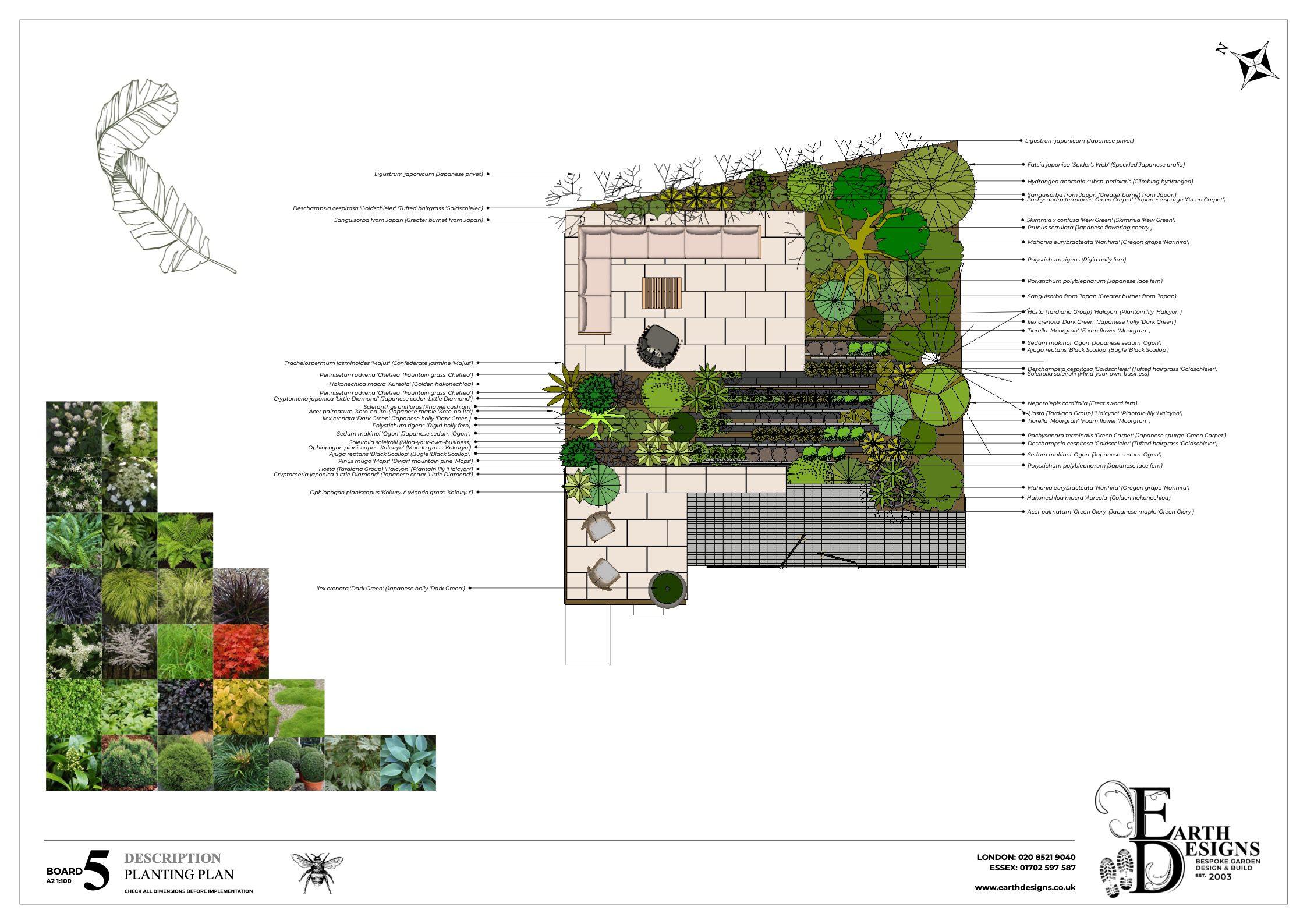
This Essex Garden Design takes inspiration from 1960s motifs, seeking to divide the garden into three separate areas with a recurringz circular theme throughout. Flooring in the space will take the form of three interconnected rectangular sections.
Each section will be edged with black limestone setts laid in a stretcher pattern (end-to-end) and will contain a mixture of black limestone paved circles and hoggin circles of various sizes, to create an ornate and visually stimulating  focal point to the garden.Southend Garden Design Each circle will be edged with black limestone setts to create clear definition to the design. The space around the limestone and hoggin circles will be planted with creeping thyme, that will spread to over time to create a soft sea of colour and fragrance around the hard surface areas. The paved areas will also benefit from three stunning stainless steel sphere water features (3 different sizes). Each sphere will be installed with a black sett circle edge to surround and finished with a mulch of blue glass chips around its base. The garden will be given a sense of privacy  and intrigue with the addition of 6 bespoke  screens installed at intervals around the patio  areas. Constructed from blue perspex panels installed on timber posts, these screens will create an impressive and colourful backdrop to the space.

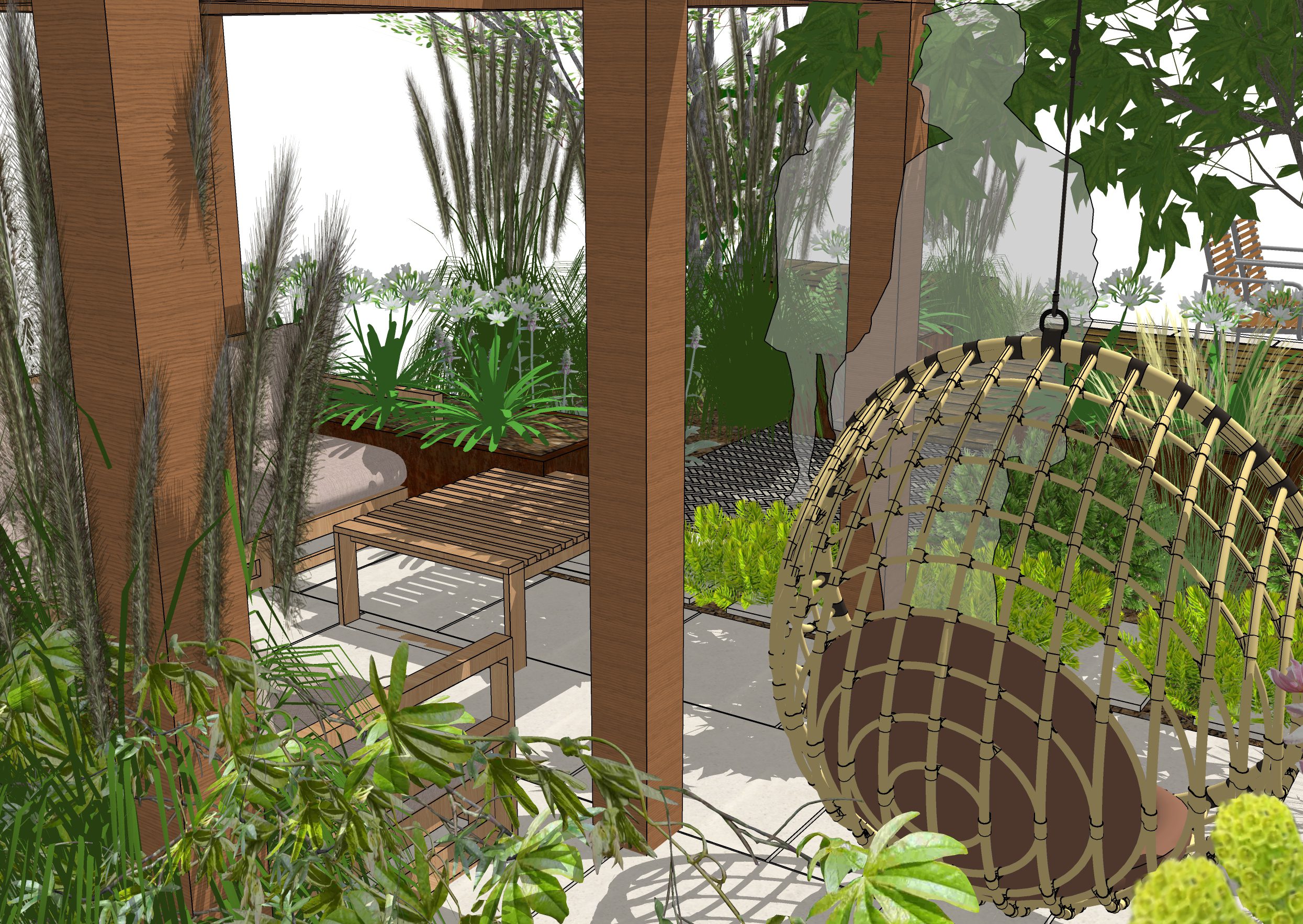
The timber pergola will be given additional screening with a series of funky ’70s disco-inspired hangings installed on the overhead beams. The pergola will further benefit from a suspended 60s styled rattan ball chair.

Lush, tropical planting will help screen the garden from the houses beyond. A large cordyline australis in a tall zinc planted will take pride of place in the centre of the large hoggin circle. Three 80cm box balls will continue the circular theme through the planting beds, interspersed with tall grasses and a selection of herbaceous perennials.


Share this:
Share this page via Email Share this page via Stumble Upon Share this page via Digg this Share this page via Facebook Share this page via Twitter

Free Garden Design Clinic Devon

April 28

We were contacted by a couple looking for some garden design advice for their garden in Devon. The existing garden has structure, however it is does not suit their circumstances and they would like to revise the design. They love curves and spirals and would like this to be the main motif throughout the space. They also wish to grow vegetables and would like to make more use of the area adjoining the existing swimming pool. An existing mature hedge splits the garden in two and needs to be removed to allow maximum usability.

The new design features a spiral of hoggin adjoining the back door, big enough to accomodate a large table and eight chairs and accentuated by a curved herb bed. A pergola running down the left hand side of the garden brings height to the  space.  Beyond the pergola is an elliptical lawn which helps to widen the garden and provide a backdrop for planting beds. A slate pathway arcs around the edge of the elliptical lawn.

A slate monolith sculpture provides screening between the front and back of the garden, providing a focal point from the back of the house. The hoggin spiral flooring terminates at the swimming pool, where it will be wide enough to accommodate sunloungers. Two existing palm trees to either side of the pool help to frame the entrance to the pool.

If you would like some free garden design advice, please do feel free to get in touch.

Share this:
Share this page via Email Share this page via Stumble Upon Share this page via Digg this Share this page via Facebook Share this page via Twitter

Garden Art – Canvassing for Garden Art

April 21

Add a big dash of colour to a wall with outdoor canvas.

If you are looking to add a big dash of colour to an unslightly garden wall – or even wish to make a screen in the garden – using garden canvases are a great solution. The Big Art Canvas company are able to supply you with the perfect masterpiece to hang on your outside wall. The great thing about outdoor canvases is that you can select any image you like – something personal, something abstract, a landscape, something botanical, or even a reproduction of an exisiting masterpiece. Great for adding big blocks of colour, or covering an unsightly wall, they are portable and in most cases reasonably priced, so you can take them with you when you move or leave them where they are and commission new canvases that fit your new garden. The canvas is completely weatherproof and guaranteed not to fade.

I prefer using them hung as a series of 3 for creating a bigger impact, however they do work equally as well on their own.  See them in situ on our Funky roof terrace design.

Use in a series for bigger impact

Share this:
Share this page via Email Share this page via Stumble Upon Share this page via Digg this Share this page via Facebook Share this page via Twitter
« Older Entries

Earth Designs Garden Design Blog seeks to advise and inspire great garden design. In the ‘Garden of the Month’ we examine a garden project in detail and the ‘Garden Design Diary’ is a weekly journal of what has been happening in the Garden Studio of our busy London Garden Design Company. Our ‘Top Tips’ articles will leave you brimming with ideas for your outdoor space while the ‘FREE Garden Design Clinic’ offers you the opportunity to submit details of your garden for a free on-line garden design consultation. And check out ‘The Garden Shed’ to find out what ideas and accessories we are storing away to use in our garden designs at a later date.  Finally, a fairly new feature called ‘The Ideas Garden’ shows how you can take inspiration for garden design from just about anywhere – a painting, a building, even an old bed!

Share this:
Share this page via Email Share this page via Stumble Upon Share this page via Digg this Share this page via Facebook Share this page via Twitter